La fin des glaces


ongoing film project

(english title : the end of the ice)
With the support of the Fédération Wallonie-Bruxelles.
Team : Rémy Bender, Maxime Gourdon, Lucien Richardson, Basile Richon & Christel Voeffray.


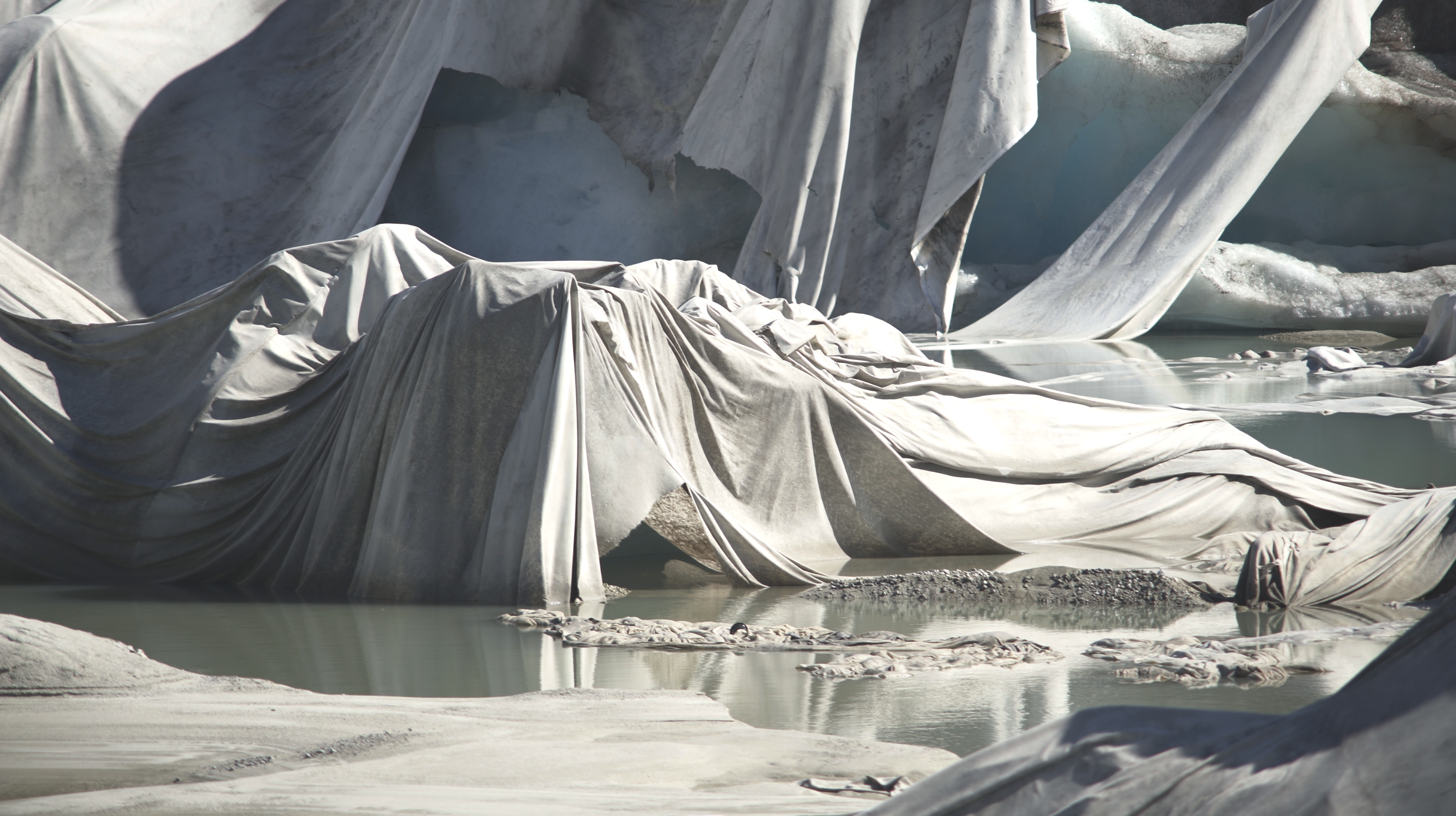
The film opens with an archive image showing the dimensions of the Rhône glacier in the 1920s. The next shot shows the same place in 2022, a century later. At first, nothing remains of the glacier.

We follow Rémy as he walks from the plain towards the source of the Rhône, following the path of the former glacier. Greenery gives way to a mineral world, then a lake. At the foot of the glacier, large swathes of white tarpaulin cover part of the ice. Climbing a little higher, we finally reach the glacier.


The film plays on a listening point and a point of view that are disjointed. In the image, we discover the different strata that make up this place today and the advanced state of melting ice. In sound, a soundscape is constructed from the dimensions of the glacier a century ago. The principle of the film is that of a double score: two spatial and temporal dimensions are superimposed, and collide.


Ramallah, Palestine, décembre 2018


2025

HD video, sound, 10’18”
Produced by Atelier Graphoui
With the support from Bureau International Jeunesse, WBI


Amid the buildings and streets of Ramallah, men take up positions. In a continuous, unedited shot, the camera witnesses a confrontation between Palestinians and Israeli soldiers illegally stationed in the city. With a single gesture, the viewer experiences the occupation of Palestinian territory in real time.


Ramallah, Palestine, december 2018 is a short documentary film shot in 2018 in the West Bank. In a continuous, unedited shot, the camera uses successive reframes to reveal a confrontation between the inhabitants of Ramallah and Israeli soldiers stationed illegally on the territory. As the camera moves, the frame widens and the audience then discovers the confrontation. Scene after scene, the audience experiences an Israeli military intrusion into Palestinian territory in real time. The camera first records groups of Palestinian men and children observing what is happening off-screen. Young men stand behind burning tyres and try to push away Israeli soldiers positioned infront of a café and in a building under construction by throwing stones at them. Parked a hundred metres away, Israeli military vehicles and reinforcements occupy the lower part of the avenue. The camera then returns to its initial frame and we see the same group of Palestinian men that opened the film: they are still there, watching, eternally uncertain.


The New Capital


2020

Video 4k, sound, 14’10”

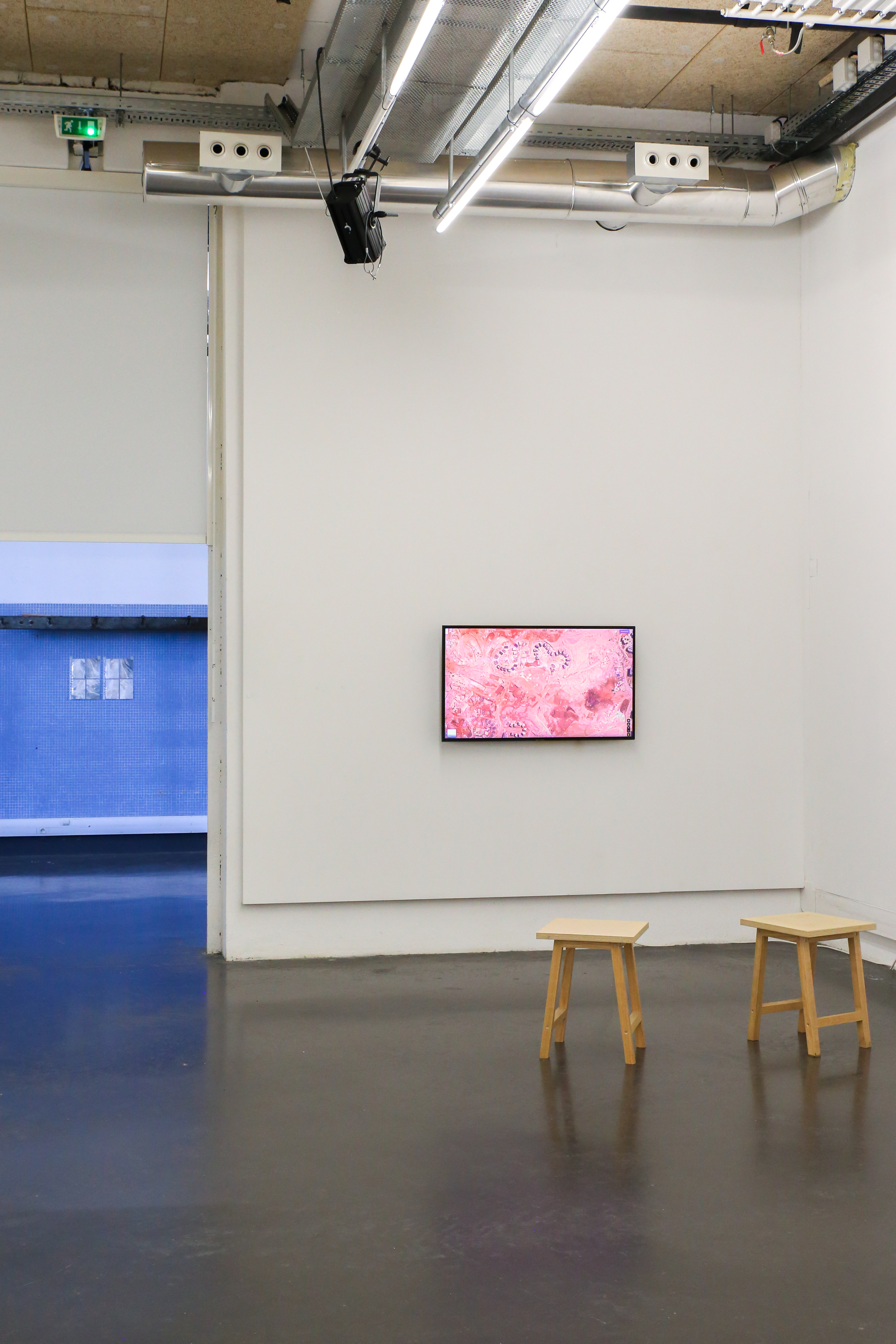
The New Capital documents the construction of Egypt's new capital in the middle of the desert, halfway between Cairo and the Suez Canal. The film combines satellite imagery, found footage and 3D models of the project led by President Abdel Fattah al-Sissi. This new ‘smart’ administrative city fills us with doubts: what are the real intentions of the authorities behind this megaproject in the middle of the desert?


Mémoires de mondes vivants


2024

(english title : Memories of alive worlds)
With the support of Wallonie-Bruxelles International


Following text written by Lisi Linster during my residency at Neimenster (LU)︎︎︎

“Images lost in their sequence, cropped, juxtaposed, manipulated, and filtered, the cinematographer and visual artist Juliette Le Monnyer breaks the temporal boundaries of photography.

During her residency at neimënster, the artist furthered her reflections on the human impact on nature. In her visual research project entitled “mémoire de mondes vivants” she investigates the desertification of the Mediterranean basin. Luscious green landscapes give way to different shades of grey and beige. The fertile ground is dried up, creating crackles, holes, and creators. Nature becomes absence, visually defined by negative spaces.

Yet the landscape is never stagnant. Nothing is motionless. It is this aspect of nature, stirred by wind and weather, that the artist is seeking to capture in her works: Nature in transition. Her works thus incite a new way of thinking about the idea of the image, the image as a sequence bound to its temporal context. Thus, rather than creating “film stills” her photographs are fragments that evoke both the past and the future. Like a film strip, they are irrevocably linked to the image before and after.


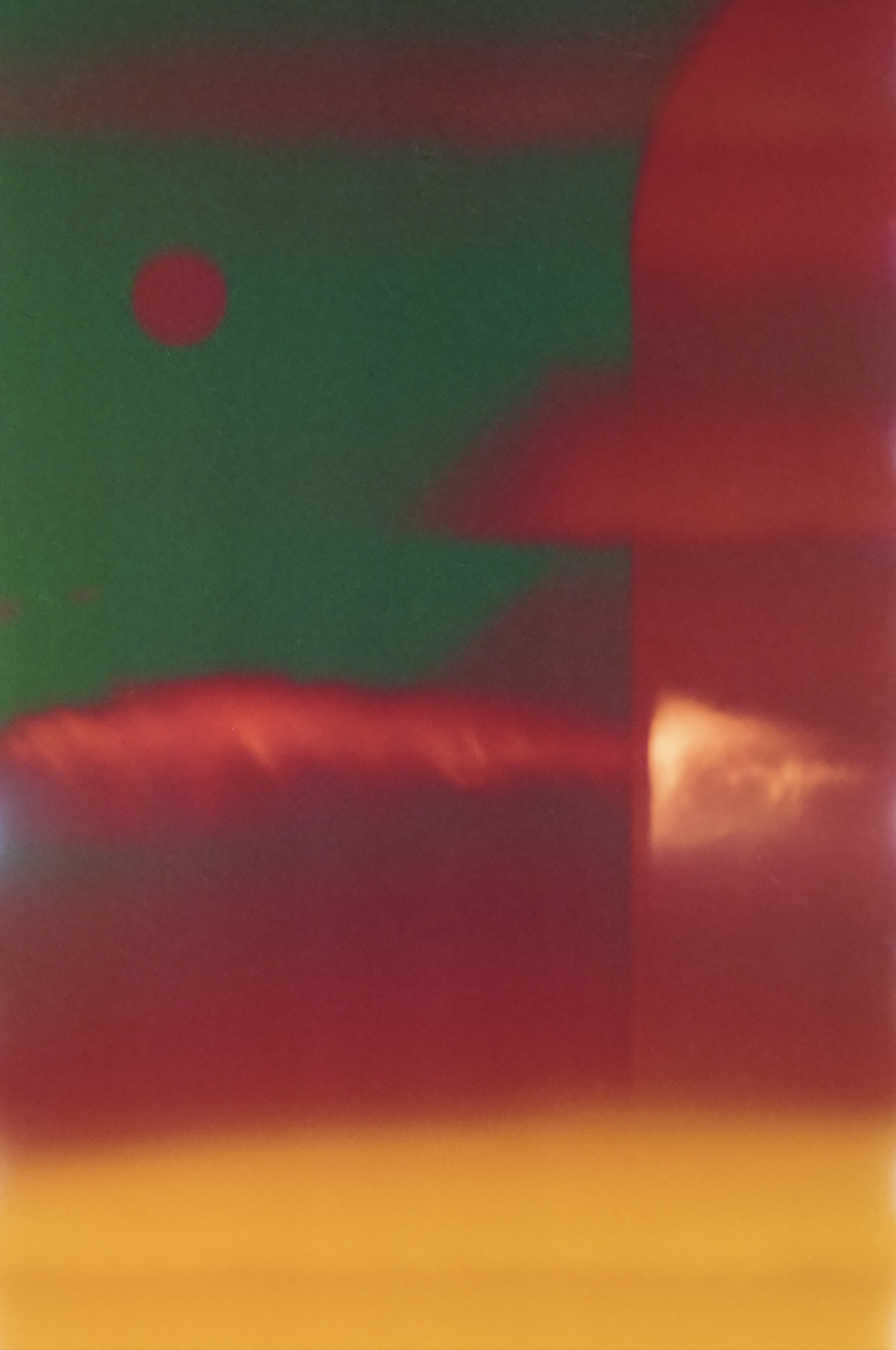
Sequence [orange] incapsulates this process: a sequence of three photographs is placed underneath different shades of orange gelatine filters. Though the images are not necessarily in direct sequence to each other the composition of the work forces a narrative onto them. Indeed, through obvious cropping, reframing, and juxtaposing, the artist highlights the image as both a temporal and a contextualised entity. The further manipulation of the image – changing of contrasts and even vectorising the landscape – and superposition of gelatine filters underline the subjective nature of the image. It is not a documentation. The image is inherently subjective. Juliette Le Monnyer explained, that through the use of filters, the landscapes regain their warmth – they get “warmed up”.

Gelatine filters are directly borrowed from stage and film lighting, to present a scenery in a different light. As such, the artist shines a literal “new light” onto these desert landscapes, bathing them in the warm glow of the sun, and making them look welcoming and fertile. But just like a filter on a mobile app, these filters mask the truth, they hide the hostile living conditions and the visible impact global warming has on nature. The work highlights how easily images can be (and are) manipulated by the media and politics, to greenwash reality, blur, filter, and hide it.

Her work at the residency is, thus, the amalgamation of her research in cinema, photography, and visual arts allowing her a specific point of view that transgresses the preconceived norms of the chosen media.”

© Neimenster


Out of sight


2020

HD video, sound, 16’53”


Out of Sight takes as its starting point the geological chronology of a volcanic rock from Egypt's Black Desert. This rock is the trace of a knowledge invisible at first sight: this desert is an ancient sea.

The video looks at the various cardinal points of these contemporary landscapes, in conversation with expert Dr. Giovanni Bertotti, Professor at the Department of Applied Geology, Faculty of Civil Engineering and Geosciences, Delft University of Technology. From the Earth's geological evolution to global warming, from the desertification of the Mediterranean basin to its future disappearance, we witness a conversation in which temporality and decadence transform our terrestrial perspectives.


Vue d'exposition, Galerie des futurs, Bozar, Bruxelles (BE)


On a single plane, 3D scans of volcanic rocks from the Egyptian black desert are assembled. Based on the principle of chronophotography, the movement is only activated when viewed by a visitor. The production of these intermediate representations - neither real rocks, nor virtual scans - makes it possible to integrate these photographic rock samples into a kinematic space, where the sequence, borrowing from the “contact sheet”, provides the impetus for movement.